2015 Ibis Ripley LS vs 2014 Santa Cruz 5010
The L is the Santa Cruz 5010 size closest to your M Ibis Ripley LS. We match frame stack and reach. This is a geometry comparison, not a fit recommendation; stem, spacers, handlebars and saddle setup also affect your riding position.
What changes on the Santa Cruz 5010
Compared with the Ibis Ripley LS in M, the Santa Cruz 5010 in L places the top of the head tube 25 mm lower and 15 mm further forward, relative to the bottom bracket. Its wheelbase is 35 mm shorter, which can contribute to quicker direction changes.
- Frame stack
- −25 mm
- Lower front end
- Frame reach
- +15 mm
- Longer frame reach
- Wheelbase
- −35 mm
- Shorter: quicker to change direction
- Head angle
- +0.5°
- Steeper: sharper steering
- Chainstays
- n/a
- One of the bikes has no number for this
The two frames
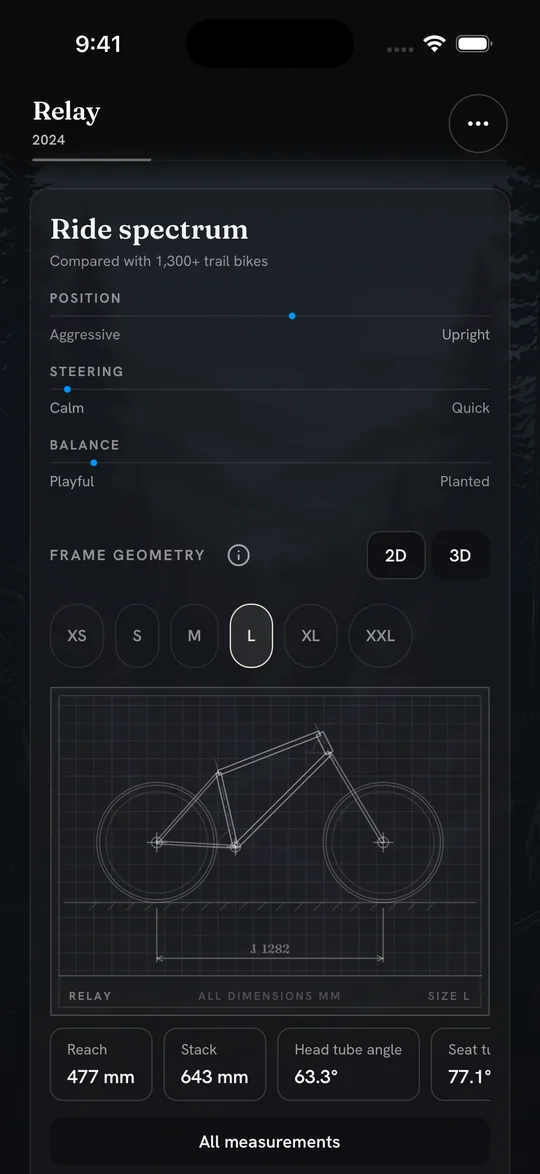
We can't draw these frames yet. The Ibis Ripley LS numbers we have for size M are missing the chainstay length. The numbers below still compare.
Geometry side by side
| Measurement | Ibis Ripley LS M | Santa Cruz 5010 L | Difference |
|---|---|---|---|
| Reach | 411 | 426 | +15 mm |
| Stack | 625 | 600.1 | −25 mm |
| Head tube angle | 67.5 | 68 | +0.5° |
| Seat tube angle | 73 | 73 | ±0.0° |
| Effective top tube | 600 | not listed | |
| Wheelbase | 1140 | 1104.8 | −35 mm |
| Seat tube length | 419 | not listed | |
| Standover | not listed | 738.7 |
Differences are the Santa Cruz 5010 minus the Ibis Ripley LS. Full charts: 2015 Ibis Ripley LS, 2014 Santa Cruz 5010.
Where each sits in its class
Ibis Ripley LSSanta Cruz 5010
Each bike is ranked against the other trail bikes on Quiver, on frame geometry alone. Not your hand position or ride feel.
Know what is on every bike.
Add your bike to Quiver. Keep its parts, setup, and service history together, then share your build.
Explore the app